
Bendy and the Ink Machine Timeline: Story Explained
Explore the Bendy and the Ink Machine timeline, from Joey Drew Studios in 1929 to Henry's looping nightmare and Audrey's arrival in Dark Revival in 1973.
Jump to
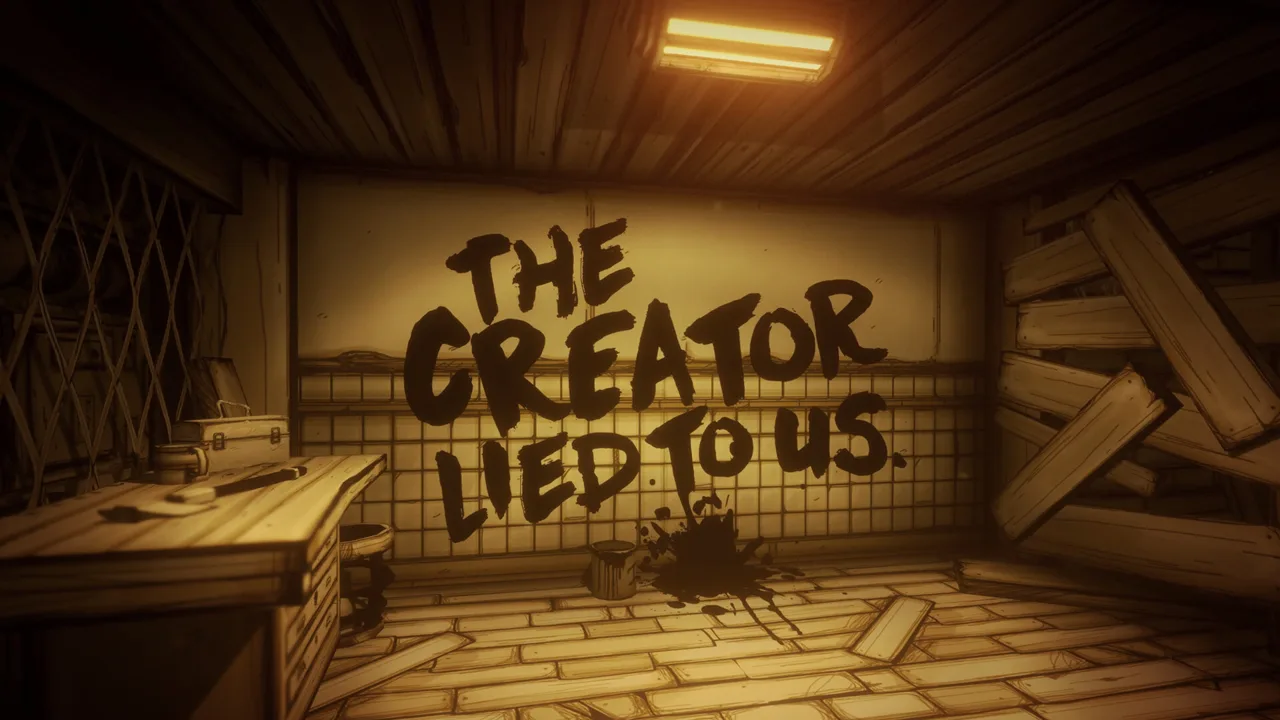
Bendy and the Ink Machine Timeline at a Glance
The Bendy and the Ink Machine timeline begins with Joey Drew Studios in 1929 and reaches Henry’s looping nightmare in 1963. Putting those events in order helps explain how a cartoon workshop became a place filled with living ink creatures. The Bendy and the Ink Machine timeline also connects to Bendy and the Dark Revival, whose main story takes place in 1973.
Major spoilers ahead for both games, including Henry’s identity, Joey’s experiments, and Audrey’s role in the Cycle.
Start with these dates before digging into individual characters:
| Year or period | Event | Connection to the story |
|---|---|---|
| 1929 | Joey Drew and Henry Stein establish Joey Drew Studios | Bendy’s animation history begins |
| Around 1930 | Henry leaves the studio | His partnership with Joey ends |
| 1940s | Joey pursues Bendyland and Ink Machine experiments | His ambitions extend to living cartoon characters |
| 1947–1948 | Financial trouble leads to bankruptcy | The studio’s business collapses |
| 1963 | Main setting of Bendy and the Ink Machine | Henry experiences the studio’s looping nightmare |
| 1971 | Joey Drew dies | His creations outlive him |
| 1972 | Nathan Arch acquires the Bendy rights | Bendy returns through Arch Gate Pictures |
| 1973 | Main setting of Bendy and the Dark Revival | Audrey enters the altered Cycle |
Keep two tracks in mind: events in the outside world and events inside the Cycle. A business closing, a character dying, and an ink creature appearing belong to different parts of that larger history.
Official page: Bendy and the Ink Machine (joeydrewstudios.com)
1929–1930: Bendy’s Creation and Henry’s Departure
Joey Drew Studios begins in 1929, founded by Joey Drew and Henry Stein in New York City. Its first Bendy cartoon, Little Devil Darlin’, introduces the character who becomes the studio’s defining creation.
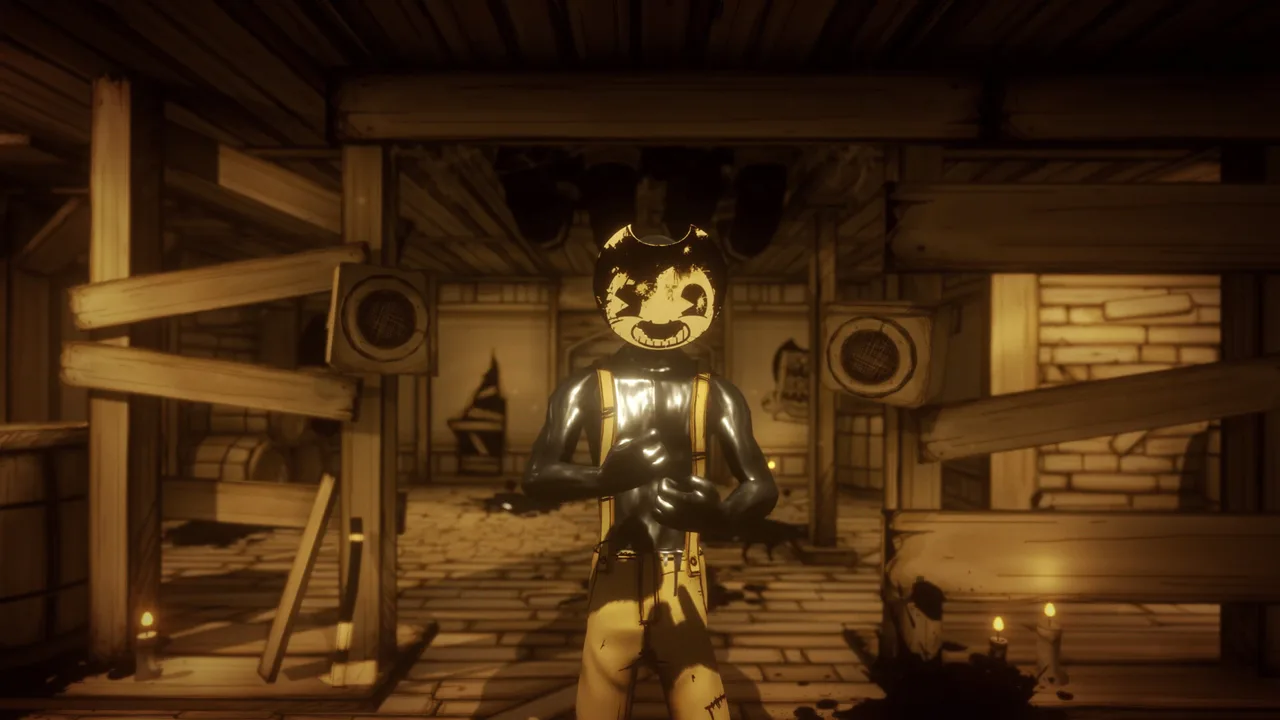 Image: Steam / Joey Drew Studios
Henry’s role matters because he was Joey’s business partner and an animator involved in developing the studio’s characters. The later invitation to revisit the workshop carries the weight of that shared history.
Around 1930, Henry leaves the company. That puts his departure long before the studio’s financial collapse and the main events of the original game.
For the Bendy and the Ink Machine timeline, this is an essential distinction: Henry’s departure belongs to the studio’s early history; his playable ordeal belongs to the much later ink-world story.
The studio continues producing cartoons after he leaves. Its surviving recordings also capture expanding ambitions, growing workloads, and employees whose names become familiar during Henry’s descent.
| Date | Studio milestone |
|---|---|
| 1929 | Joey Drew Studios is established; Little Devil Darlin’ is produced |
| Around 1930 | Henry Stein leaves the company |
| 1931 | Joey records an announcement about the studio’s future |
| 1933 | Wally Franks records his reaction to the growing workforce |
| 1940 | Bertrum records his objections to Joey’s criticism of Bendyland |
| November 18, 1943 | Jack Fain records an account of Joey speaking with Thomas Connor |
When listening to these recordings, track what each employee actually discusses. A complaint about animation work belongs to a different stage of the studio’s decline than a conversation about machinery or an amusement park.
The 1940s: Bendyland, the Ink Machine, and Bankruptcy
The next major stretch of the Bendy and the Ink Machine timeline follows Joey’s attempt to bring his cartoons into the physical world.
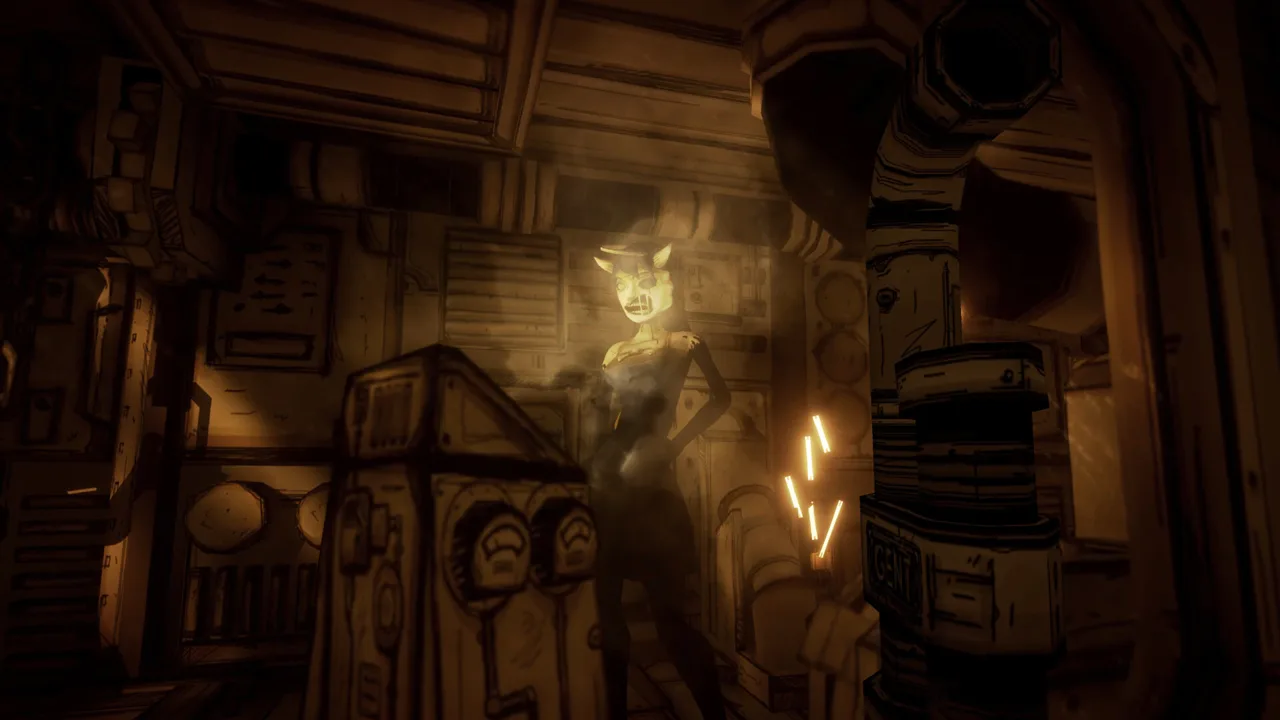 Image: Steam / Joey Drew Studios
Bendyland is central to that ambition. Bertrum oversees the amusement park project, while Joey pursues living cartoon mascots as an attraction. The Ink Machine gives that dream a dangerous practical form.
Joey’s Partnership With Gent
Joey’s dealings with Gent connect the studio to the machinery behind its experiments. Thomas Connor is an important name in that relationship, and Joey meets with him in November 1943 to formalize their companies’ partnership.
The experiments lead to the Ink Demon and other disastrous results. Joey’s effort to create living cartoon characters also involves sacrificing employees and using human souls.
That history gives the workshop’s abandoned equipment a grim context. The machine sits at the center of Joey’s attempt to turn an entertainment business into something far more invasive.
Follow three connected threads through this period:
- Bendyland: Joey’s plan to expand the Bendy brand into an amusement park.
- Gent: The company connected to the Ink Machine’s development.
- The experiments: Attempts to create living cartoon characters, with devastating consequences for people.
The broad sequence matters more than assigning every creature an exact transformation date. Joey’s ambitions grow, the experiments produce horrors, and the company’s finances deteriorate.
The Studio’s Collapse
By 1947, the studio’s financial distress has become newspaper material. In 1948, another article announces Bendy’s bankruptcy.
Those dates place the company’s collapse well before the original game’s 1963 setting. Henry’s journey takes him through the remains of an enterprise whose business failure is already years behind it.
Animation departments, industrial machinery, and stored amusement park attractions all reflect projects pursued under Joey’s leadership.
For your own timeline notes, keep financial events separate from individual character histories. Bankruptcy gives the company a dated milestone; it does not assign a date to every tragedy inside its walls.
1963: Henry’s Journey Through the Five Chapters
The main setting of Bendy and the Ink Machine is 1963. Its opening premise brings Henry back to the old workshop after an invitation from Joey.
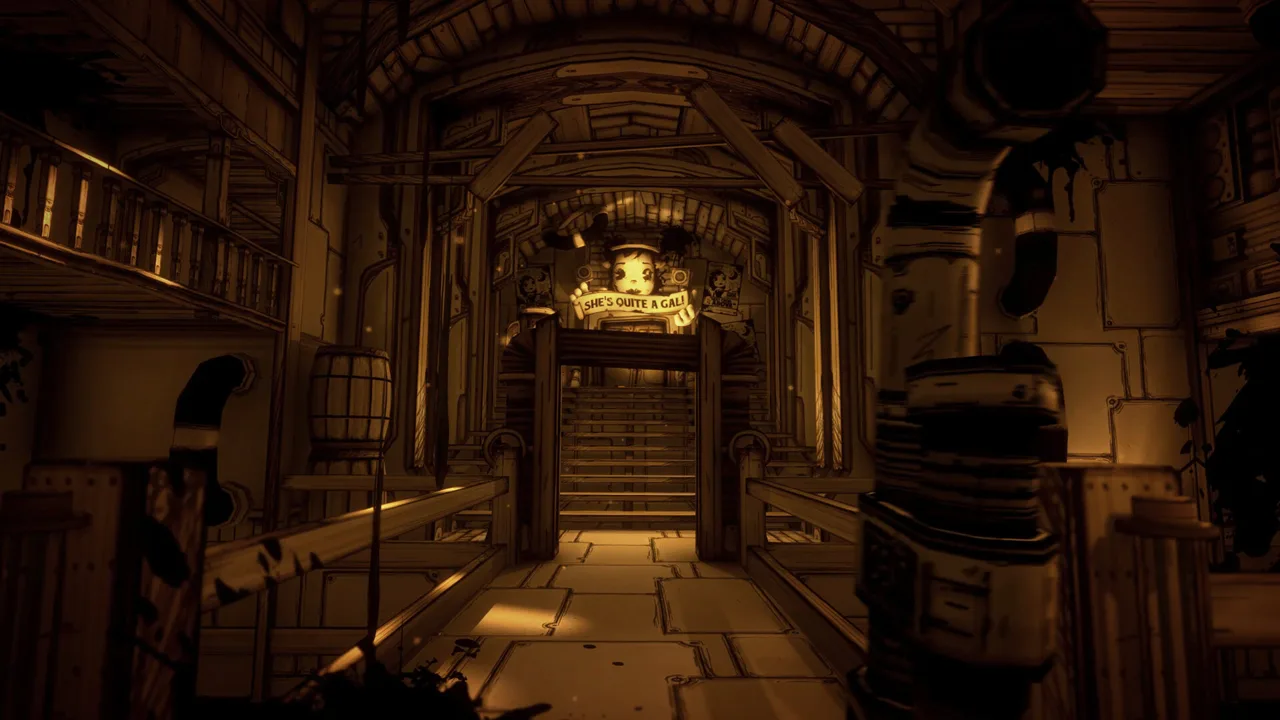 Image: Steam / Joey Drew Studios
The game then takes you progressively deeper into the studio, revealing employees’ histories through recordings while placing their ink-world counterparts directly in your path.
Use the chapter sequence to organize the playable story:
| Chapter | Main story movement | Characters and places to track |
|---|---|---|
| Chapter 1 | Henry explores the workshop and activates the Ink Machine | The old animation studio and the Ink Demon |
| Chapter 2 | Henry travels through the music department and encounters Sammy | Sammy Lawrence, Jack Fain, and Boris |
| Chapter 3 | Henry accompanies Boris and performs tasks for Twisted Alice | Heavenly Toys, the Projectionist, and the studio’s lower levels |
| Chapter 4 | Henry searches for Boris through the attraction areas | Bertrum, the Haunted House, and the transformed Boris |
| Chapter 5 | Henry continues with Allison and Tom toward the Ink Machine | Sammy, Administration, the Film Vault, and the ending |
How the Chapter Order Reveals the Past
Chapter 1 establishes the basic horror: Henry’s old workplace contains machinery and creatures far removed from ordinary animation production.
Chapter 2 brings the music department into focus. The recordings preserve traces of the department’s working life.
Chapter 3 expands the story through Boris and Twisted Alice. Henry’s errands take him between studio levels, connecting the toy department, ink processing spaces, and the Projectionist’s territory. Alice’s obsession with perfecting herself becomes a driving threat.
Chapter 4 turns Bendyland’s history into a physical obstacle course. Stored attractions and Bertrum’s encounter bring Joey’s amusement park ambitions into the foreground. Henry’s search for Boris ends in a confrontation with the friend he was trying to rescue.
Chapter 5 introduces a different alliance through Allison and Tom. The route passes through Administration and the Film Vault before reaching the Ink Machine.
Why Henry’s Identity Changes the Timeline
The crucial distinction is between the human Henry who left Joey Drew Studios and the ink-created Henry trapped in the Cycle.
Joey creates an ink version of his former partner and subjects him to an endlessly repeating ordeal. That makes Henry’s journey more complicated than a straightforward visit to an abandoned building.
For the Bendy and the Ink Machine timeline, separate these facts carefully:
- Henry Stein leaves Joey Drew Studios around 1930.
- The original game’s main setting is 1963.
- The Henry enduring the Cycle is an ink-created counterpart of Joey’s former partner.
The repeated ordeal is the key to understanding why reaching the ending does not resolve Henry’s situation like an ordinary escape story.
When replaying, organize your notes by chapter and recording. This keeps the order in which Henry discovers information separate from the order in which the studio’s historical events occurred.
1971–1973: Joey’s Legacy and Dark Revival
Joey’s influence continues beyond his lifetime. He dies in 1971, but the Bendy property, the Ink Machine, and the Cycle remain central to what follows.
Nathan Arch’s acquisition brings Bendy into a new business era. Audrey’s story then shows how another person can enter—and change—the ink world.
| Date | Event | Story consequence |
|---|---|---|
| 1971 | Joey Drew dies | His creations continue without their original creator |
| 1972 | Nathan Arch acquires the rights to Bendy | Arch Gate Pictures revives the property |
| 1973 | Audrey works late at Arch Gate Pictures | Wilson tricks her into activating the Ink Machine |
| During Dark Revival | Audrey enters the altered Cycle | Wilson’s control becomes central to her struggle |
| At Dark Revival’s ending | Audrey plays “The End” | The Cycle resets |
Wilson and the Altered Cycle
Wilson discovers the Ink Machine’s powers and attempts to control the world within it. His Keepers help prevent the Cycle from resetting and suppress threats to his authority.
That changes the conditions Audrey encounters. Her journey takes place in a Cycle already affected by Wilson’s interference.
Audrey eventually kills Wilson before he can use her soul for his plan. She then plays “The End” reel, resetting the Cycle and making it more bearable for its inhabitants.
This places Dark Revival ten years after the original game’s main setting in the outside-world chronology. Inside the Cycle, repetition and intervention complicate a simple calendar-based reading.
Keeping the Larger Story Organized
The Bendy and the Ink Machine timeline becomes easier to follow when you distinguish three layers:
- Studio history: The company’s founding, Henry’s departure, Bendyland, and bankruptcy.
- Henry’s playable story: The five-chapter descent through the Cycle.
- The sequel’s events: Audrey’s arrival and her confrontation with Wilson in 1973.
Keep character origins separate from dates unless an event has a specific year attached. Likewise, keep theories separate from the established sequence. A proposed secret identity can change how someone interprets a scene, but it does not belong beside a dated studio milestone as an equivalent fact.
For a replay focused on the story, follow the five chapters in order and listen to the employee recordings along the way. In version 2.1.0, all main chapters are unlocked regardless of progress, making it easier to revisit a particular part of Henry’s journey.
FAQ
What Year Does Bendy and the Ink Machine Take Place?
The game’s main setting is 1963. Its historical backstory stretches back to Joey Drew Studios’ founding in 1929 and covers the company’s expansion, experiments, and financial collapse.
Where Does Dark Revival Fit in the Bendy and the Ink Machine Timeline?
Bendy and the Dark Revival takes place primarily in 1973, ten years after the original game’s main setting. Audrey enters the altered Cycle on June 18 after Wilson tricks her into activating the Ink Machine.
Is Henry the Same Person Who Left the Studio Around 1930?
The human Henry Stein leaves Joey Drew Studios around 1930. The Henry trapped in the Cycle is an ink-created version of Joey’s former business partner, made to endure a repeating nightmare.
When Did Joey Drew Studios Go Bankrupt?
A newspaper article in 1948 announces Bendy’s bankruptcy. An earlier article, dated 1947, describes the studio’s financial distress, placing its collapse years before Henry’s playable story.
Continue with
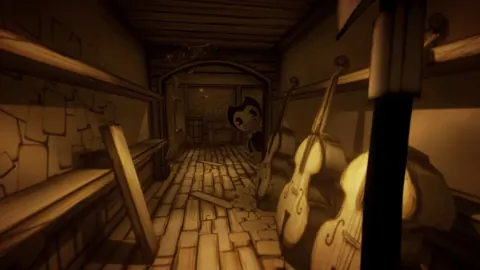 Bendy and the Ink Machine Year Set: Timeline ExplainedExplore the Bendy and the Ink Machine year set, Henry's 1963 return, the studio's earlier history, and how Dark Revival fits into the timeline. Start here.
More in Story
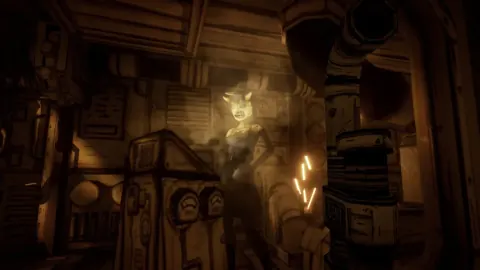
Bendy and the Ink Machine Endings: The Loop Explained
Explore Bendy and the Ink Machine endings, Henry's repeating journey, Joey's final scene, and the secrets worth finding before you finish the main story.

Bendy and the Ink Machine Lore: Story and Ending Guide
Explore Bendy and the Ink Machine lore, from Joey Drew's experiments to Henry's Cycle. Understand the characters, timeline, and ending before replaying.
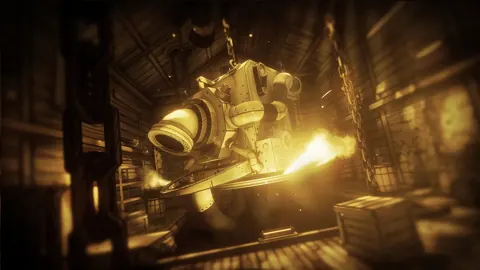
Bendy and the Ink Machine Story Guide: All 5 Chapters
Follow this Bendy and the Ink Machine story guide through all five chapters, solve key puzzles, face studio horrors, and track down missable audio logs.
Continue exploring
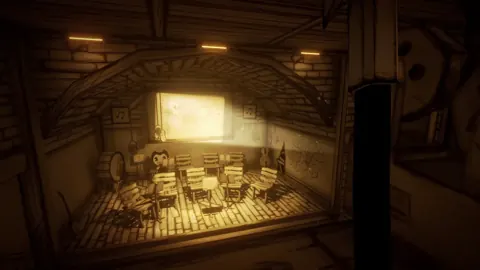
Bendy and the Ink Machine Standing Proud: Unlock Guide
Unlock Bendy and the Ink Machine standing proud by finishing all five chapters, entering the Archives, and standing on Henry Stein's pedestal. Start here.
Bendy and the Ink Machine Reddit: Help, Lore & Tips
Bendy and the Ink Machine reddit searches made easier: find focused puzzle help, compare version changes, avoid spoilers, and plan your achievement runs.
Join the community
Official channels for news, updates and player help: