
Bendy and the Ink Machine Year Set: Timeline Explained
Explore the Bendy and the Ink Machine year set, Henry's 1963 return, the studio's earlier history, and how Dark Revival fits into the timeline. Start here.
Jump to
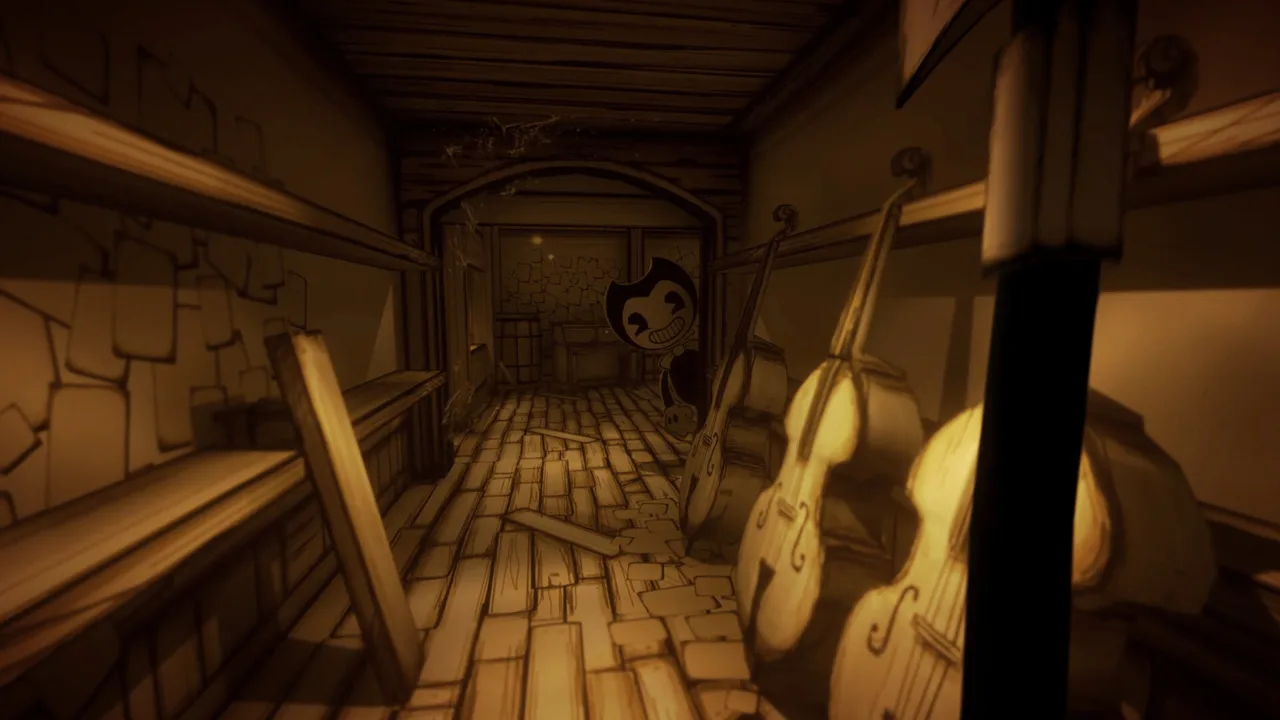
What Year Is Bendy and the Ink Machine Set In?
The answer to “Bendy and the Ink Machine year set” is 1963, when Henry returns to the abandoned Joey Drew Studios. That date matters because the animation workshop preserves a much older chapter of its history, making its cartoon imagery easy to mistake for the story’s present. If the Bendy and the Ink Machine year set feels confusing, separate Henry’s return from the years when the studio produced its cartoons.
You play as Henry, a former animator invited back by Joey Drew. Exploring the workshop brings you into contact with the studio’s abandoned workspaces, former employees’ recordings, and the consequences of its experiments. Those pieces belong to different moments in a history stretching back decades.
Keep these dates in mind:
| Event | Year | Connection to the story |
|---|---|---|
| Joey Drew Studios is established | 1929 | Begins the studio’s history |
| Henry Stein leaves the studio | 1930 | Places his original employment long before his return |
| Henry returns in Bendy and the Ink Machine | 1963 | Anchors the original game’s events |
| Bendy and the Dark Revival’s main setting | 1973 | Places the sequel a decade later |
The distinction helps you read the environment. A cartoon poster represents the studio’s creative past. An employee recording captures a particular workplace problem. Henry’s exploration belongs to the later story.
For the Bendy and the Ink Machine year set, 1963 is the date to remember. The earlier years explain what happened to the place you are walking through.
Official page: Bendy and the Ink Machine (joeydrewstudios.com)
Why Does the Studio Feel Like the 1930s?
Joey Drew Studios built its identity around early animation. Its cartoon characters, recording spaces, and production equipment preserve that identity throughout the abandoned workshop. You encounter the remains of a company whose creative life began well before Henry’s return.
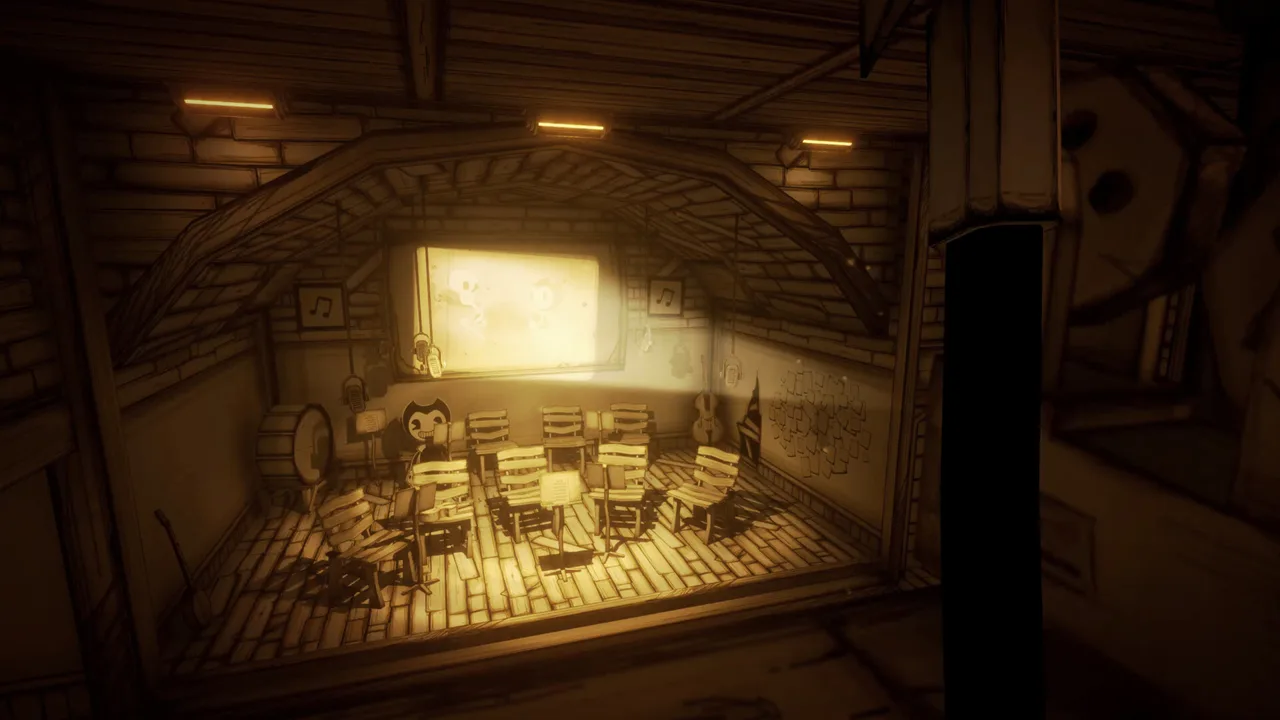 Image: Steam / Joey Drew Studios
The studio was established in 1929 by Joey Drew and Henry Stein on Broadway in New York City. Bendy also debuted that year in Little Devil Darlin’. Henry left in 1930, while the studio continued producing cartoons throughout the following decade.
That gives the setting its layered feel: you enter in 1963, but much of what surrounds you belongs to the company’s earlier ambitions.
| Year | Studio milestone | What it adds to the timeline |
|---|---|---|
| 1929 | Joey Drew Studios opens; Little Devil Darlin’ introduces Bendy | Establishes the company and its central character |
| 1930 | Henry leaves the studio | Separates Henry’s working years from later developments |
| 1931 | Haunted Hijinx and Cookie Cookin are produced | Shows continued cartoon production |
| 1932 | Planning begins for a female cartoon character | Marks an expansion of the cartoon cast |
| 1934 | Snow Sillies is produced | Adds another production milestone |
| 1935 | Tasty Trio Troubles is produced | Continues the studio’s animation history |
The Bendy and the Ink Machine year set becomes easier to understand when you think of the workshop as a place holding several decades of history. Its appearance reflects what the company made and how its employees worked.
That older identity also supports the horror. Familiar cartoon faces remain scattered through spaces that have become dangerous. The cheerful branding and the condition of the workshop pull in opposite emotional directions.
As you explore, distinguish between the age of an object and the date of Henry’s visit. A poster can help you understand the studio’s past without changing the year of the main story. Apply the same distinction to recordings: the employee speaking belongs to the moment being recorded.
Where the Ink Machine Fits Into the 1940s
The studio’s history extends beyond its early cartoons. By the 1940s, Joey’s plans included Bendyland, an amusement park project, and a scheme to bring cartoon mascots to life.
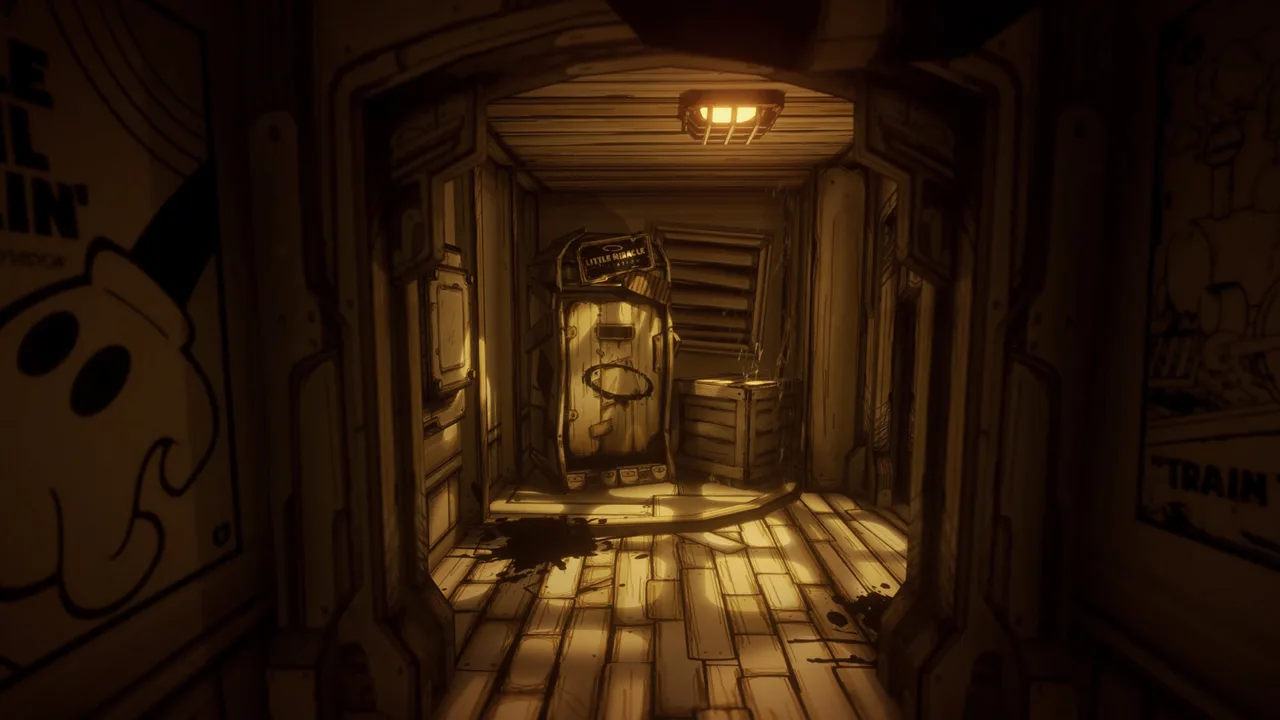 Image: Steam / Joey Drew Studios
Construction planning for Bendyland began before World War II, with Bertrum supervising the project. In the mid-1940s, Joey’s arrangement with Gent connected the attraction’s ambitions to the creation of the Ink Machine.
His goal was to use living cartoon mascots instead of performers wearing costumes. The machine’s creation led to the Ink Demon, failed experiments, and mounting debt to Gent.
| Date or period | Development | Why it matters |
|---|---|---|
| Before World War II | Bendyland construction begins under Bertrum | Establishes the amusement park project |
| 1940 | Bertrum records objections to Joey’s criticism | Reveals conflict surrounding Bendyland |
| November 1943 | Joey meets with Thomas Connor about their companies’ partnership | Adds a dated business milestone |
| Mid-1940s | Joey’s deal with Gent leads to the Ink Machine | Connects the machine to living mascot plans |
| 1948 | A newspaper publishes “Bendy Goes Bankrupt” | Marks the studio’s financial collapse |
These events explain why a single year cannot describe everything you encounter. The studio’s foundation, its cartoons, its expanding business plans, and its machine experiments happened at different points.
When sorting out the Bendy and the Ink Machine year set, place the Ink Machine’s development before Henry’s 1963 return. The experiments form part of the history he is walking into.
Bendyland also gives context to the attraction-related spaces and machinery you encounter later. The company’s ambitions reached beyond making cartoons for a screen. Joey wanted those characters to occupy physical spaces and entertain visitors in person.
Follow that progression—cartoons, attractions, living mascots—and the workshop’s strange mixture of animation equipment and industrial machinery becomes easier to read. Each reflects a different part of the business Joey was trying to build.
How to Follow the Timeline While You Play
You can understand the main date without collecting every secret, but listening to employee recordings helps connect the studio’s history to its rooms and machinery.

For the Bendy and the Ink Machine year set, organize your notes around events and speakers. Keep the date of Henry’s return separate from the working lives described in the recordings.
Use a short checklist:
- Record explicit dates. Keep a dated event attached to the event it describes.
- Write down the speaker’s name. This helps distinguish different employees’ experiences.
- Separate animation work from machine experiments. Both belong to the studio’s history.
- Track business projects individually. Bendyland, cartoon production, and the Gent partnership have distinct milestones.
You do not need a sprawling theory document. A few lines separating people, projects, and dates will make later discoveries easier to place.
Start With the Early Audio Logs
In Chapter One, look for an audio log on a small table in the hallway leading toward the theater room. Another sits on a shelf in the area reached after falling through the floor and draining the room.
Listen before rushing onward. These recordings give the abandoned spaces a workplace context: people once had jobs, frustrations, and expectations here.
Chapter Two adds recordings around the music department. Look on the Recording Room’s upstairs balcony near the projector, beside the piano, and opposite Sammy Lawrence’s office.
Connect each speaker’s concerns to the area around you. The recording spaces and employee accounts help explain how the studio functioned before Henry’s exploration.
Keep Chapter Three’s Branches in Mind
Chapter Three offers the Demon path and the Angel path. Each contains an exclusive audio log, so hearing both recordings requires separate runs of the chapter.
If you want to follow every employee account, include both branches in your replay plans. That choice affects which recording you encounter, while the broader story still belongs to the same timeline.
Avoid treating an unheard recording as a reason to rebuild your entire chronology. Add its information to the relevant person or event when you reach it.
Check Management and Joey’s Office
In Chapter Four, an audio log sits on the desk to the right immediately after entering the door marked “Management.”
In Chapter Five, Joey Drew’s office contains another recording. Pause for these locations as you move through the later parts of the studio.
Following the recordings this way gives you a practical route through the backstory. You hear workplace accounts alongside the spaces associated with them, rather than trying to memorize every historical date before playing.
How Dark Revival and the Release Dates Fit
Bendy and the Dark Revival has its main setting in 1973, ten years after the original game’s 1963 placement. Its opening follows Audrey working late at Arch Gate Pictures on June 18 before Wilson draws her into events involving the Ink Machine.
Several franchise milestones fall between the two games. Joey Drew dies in 1971. Arch Gate Pictures is founded in 1972, and the company purchases the rights to Bendy that year.
These dates help distinguish the original studio’s history from Bendy’s later life under a different company.
The Bendy and the Ink Machine year set also needs to stay separate from the game’s release history:
| Date | What it represents | Timeline category |
|---|---|---|
| 1963 | Bendy and the Ink Machine’s events | Fictional setting |
| April 27, 2017 | Steam release date | Real-world release |
| November 20, 2018 | Nintendo Switch release date | Real-world release |
| 1973 | Bendy and the Dark Revival’s main setting | Fictional setting |
A platform release date tells you when that version became available. It does not move Henry’s visit into a different decade.
Likewise, technical updates belong to the game’s development history. The Quality of Life 2.1.0 update includes Steam Deck verification, Steam Cloud support, and gameplay fixes. Those changes concern playing the game; they do not supply a new calendar year for Henry’s return.
When discussing the story with other players, use the event’s name alongside its date: “the studio opens in 1929,” “Henry returns in 1963,” or “Dark Revival opens in 1973.” That small habit keeps conversations about the lore clear, especially when release dates enter the discussion.
FAQ
What is the Bendy and the Ink Machine year set?
Bendy and the Ink Machine is set in 1963. Henry returns to the abandoned Joey Drew Studios long after his original time working there. The studio’s cartoons and employee recordings introduce events from earlier decades.
Is Bendy and the Ink Machine set in the 1930s?
The main story takes place in 1963. The 1930s are part of the studio’s earlier history, including cartoon production and employee experiences. That history shapes the workshop’s appearance and the backstory you uncover.
When did Henry leave Joey Drew Studios?
Henry Stein left in 1930, after helping establish the studio with Joey Drew in 1929. His departure and his later return are separate milestones in the company’s history.
What year is Bendy and the Dark Revival set in?
Bendy and the Dark Revival’s main setting is 1973. Audrey’s opening takes place on June 18, placing the sequel’s main setting ten years after Bendy and the Ink Machine.
Continue with
 Bendy and the Ink Machine Endings: The Loop ExplainedExplore Bendy and the Ink Machine endings, Henry's repeating journey, Joey's final scene, and the secrets worth finding before you finish the main story.
More in Story

Bendy and the Ink Machine Lore: Story and Ending Guide
Explore Bendy and the Ink Machine lore, from Joey Drew's experiments to Henry's Cycle. Understand the characters, timeline, and ending before replaying.
Bendy and the Ink Machine Story Guide: All 5 Chapters
Follow this Bendy and the Ink Machine story guide through all five chapters, solve key puzzles, face studio horrors, and track down missable audio logs.
Bendy and the Ink Machine Timeline: Story Explained
Explore the Bendy and the Ink Machine timeline, from Joey Drew Studios in 1929 to Henry's looping nightmare and Audrey's arrival in Dark Revival in 1973.
Continue exploring
Bendy and the Ink Machine Standing Proud: Unlock Guide
Unlock Bendy and the Ink Machine standing proud by finishing all five chapters, entering the Archives, and standing on Henry Stein's pedestal. Start here.
Bendy and the Ink Machine Gear Boxes on Level K Guide
Find Bendy and the Ink Machine gear boxes on level k, open them with the wrench, and solve Alice's gear task with tips for three- and five-gear versions.
Join the community
Official channels for news, updates and player help: